

In relatively recent years we have learned that radon exposure in homes is neither rare nor uniformly distributed. Radon is a mildly radioactive gas present in soil and rock that in certain areas may be concentrated because of land features and rock formations. The EPA indicates that 1 in 4 homes in Massachusetts, primarily in 3 counties including Middlesex, likely have dangerous radon levels (over 4 pCi/L).
Radon gas may enter a home from the soil or rocks up through the basement and from there permeate the living spaces. Why does this matter? Long-term exposure to high radon levels is significantly associated with lung cancers. Radon is the primary cause of lung cancer in nonsmokers and the second cause of all lung cancers after cigarette smoking.
Fortunately, radon gas can be detected and high levels readily mitigated. However, an unknown but probably large number of homes in our region have never been tested for radon, since mandatory radon testing of new homes only began in 2015 and testing is not required for existing home purchases.
Radon Testing Readily Available
Radon gas is odorless and colorless. The “gold standard” of radon detection has been activated charcoal air capture units, essentially small cardboard boxes with activated charcoal inside, which are placed in a home in the living area and opened to the air for a measured number of days. The units are then sealed and labeled and sent to a radon laboratory for measurement of the captured radon. The collection box itself does no analysis and has no readout. These tests are reliable if used properly. The Mass Dept of Public Health makes them available for free through DPHIAQ@mass.gov or by calling the Radon Hotline (800) 723-6695. But public use of the charcoal units has not been very active, likely because of the complexity and time span of collection and results.
More recently, effective electronic radon meters have been developed by a number of companies and are widely available. There are international standards for their efficacy. The meters are simply placed in the home main living area and left to sit for a week. They record radon levels hour by hour, with a visible display, and develop a stable reading after seven days.
Effective Mitigation Efforts Easily Available
In the town of Lincoln, where I am on the board of health, we obtained and have made Air Things brand Corentium meters available for use by town residents to test their homes. An elevated risk result (over 4 pCi/L) should certainly be confirmed by a charcoal test and most likely should prompt outreach to a radon mitigation firm in the effort.
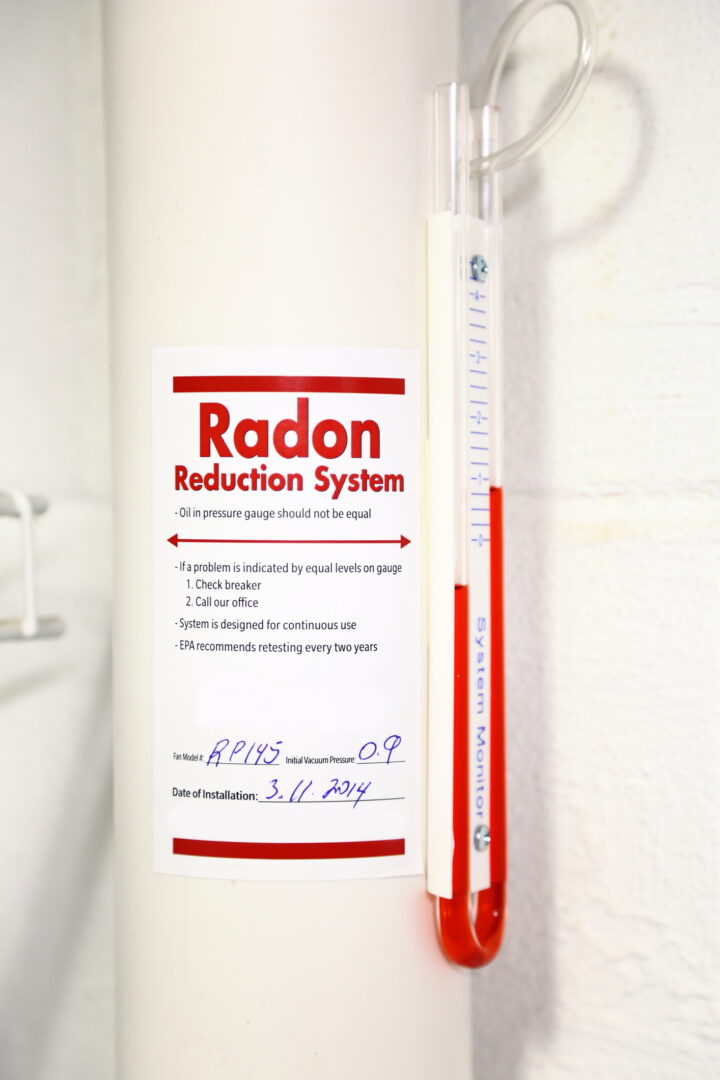
Radon mitigation is straightforward. The gas arises in the subsoil and rock below the house foundation. Holes are drilled into the cellar floor into the sand or gravel underneath, and an exhaust fan is piped from there to the outside of the home. This approach is highly effective and not unreasonably expensive (typically less than $2,000).
I urge each of you to confirm that your home was tested for radon and that you know the results. If not, get it done soon. This particular environmental hazard is much more prevalent than people are aware, is quite serious, and can be effectively and simply mitigated.